Skip to content

USLAF Logo

  • About
    • Mission
    • Team
    • History
    • Press
  • Events
    • X as Intersection
  • Programs
    • Writing on Latinx Art
      • Previous CFPs
    • Latinx Artist Fellowship
    • Micro-Grants
      • Charla
      • CHISPA
      • Artist Mentorship Program
  • Contact
    • Newsletter
    • Email
Donate
USLAF Logo
  • About
    • Mission
    • Team
    • History
    • Press
  • Events
    • X as Intersection
  • Programs
    • Writing on Latinx Art
      • Previous CFPs
    • Latinx Artist Fellowship
    • Micro-Grants
      • Charla
      • CHISPA
      • Artist Mentorship Program
  • Contact
    • Newsletter
    • Email
Donate
USLAF Logo
Home Essays Dominican American Art

Topic: Dominican American Art

AllAbolitionAbstractionAfro-LatinxartesaníaAssemblageBlack AtlanticBlacknessBorderlandsBuilt EnvironmentCaliforniaCapitalismCaribbeanCeramicsChicanx ArtColombiaColonialismCraftCuban American ArtDecolonialityDiasporaDisplacementDominican American ArtEcologiesEmbodimentEnvironmental JusticeExileFeminismFiber artFilmGender-Based ViolenceGentrificationHairIndigeneityInstallation ArtLaborMaterialityMemoryMigrant ImaginariesMigrationMixed MediaMultidisciplinary artNepantlaNew MexicoNicaraguaNueva YorkNuyorican ArtPaintingPerformancePhotographypostcolonialPrintmakingPublic ArtPuerto Rican ArtPuerto RicoQueernessSacredSalvadoran American ArtSan AntonioSculptureSonoran DesertSoundSpiritualityState ViolenceTexasU.S.-Mexico Bordervideo artwaterWorldmaking
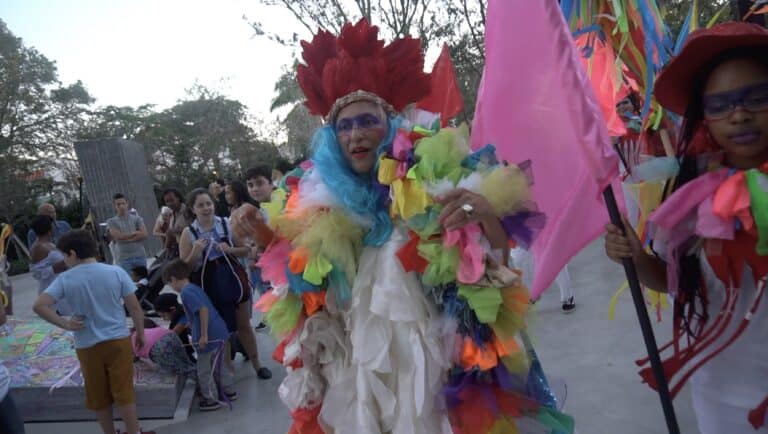
Charo Oquet leads a colorful Rará-inspired procession, wearing a vibrant costume of multicolored fabric and a feathered headdress while carrying a pink flag. Community members gather around her, joining the festive performance through music, movement, and shared participation.

Learning in Procession: Charo Oquet and the School of Rará

Luis Graham Castillo
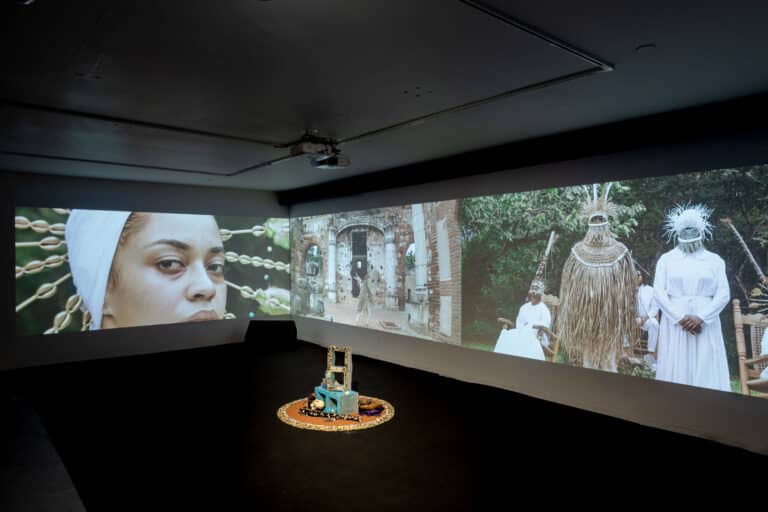
This image shows the installation of “Babalú-Ayé y La Negra del Hospital” (2022) at the Fridman Gallery in New York. In a dark room, there are three large panoramic projections on adjacent walls surrounding a small sculpture composed of cinder blocks decorated with cowrie shells placed in the off-center right side of the gallery. The video, still on the left side, shows a Black woman with a white headpiece with cowrie shells looking directly at the viewer. In the center there is a figure dancing in the middle of colonial architecture structures. The image to the far right shows three figures dressed in ceremonial attires that display Black diasporic culture. One of the figures is sitting on a rocking chair while the other two people stand facing forward.

Bearing Her to the Present:
Yelaine Rodriguez and the Un-Ghosting of Afro-Dominican Identity

María Elena Ortiz
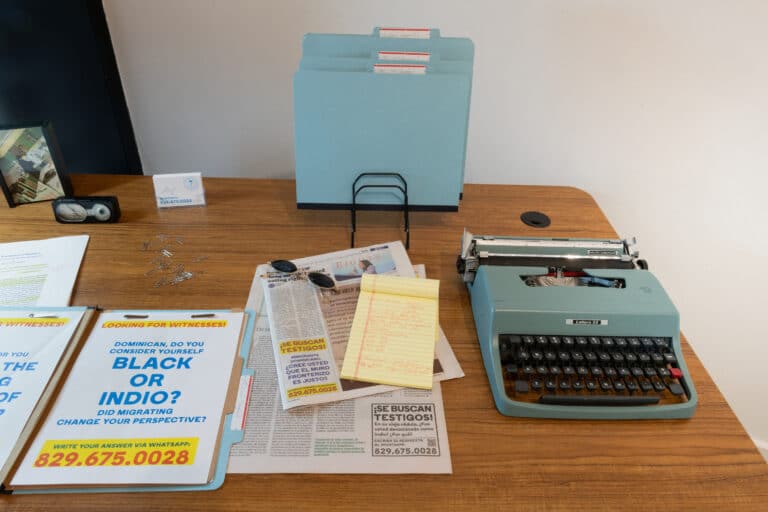
A wooden desk staged as a detective’s workstation: a vintage teal typewriter at right, a stand of pale-blue date-labeled file folders at center, and across the surface a yellow legal pad of handwritten notes, newspapers, round sunglasses, business cards printed with a WhatsApp number, and an open folder showing a flyer that reads “Looking for Witnesses! Dominican, do you consider yourself Black or Indio? Did migrating change your perspective?”

The Investigator’s Folder:
Curriculum as Form in Lizania Cruz’s The Investigation of the Dominican Racial Imaginary

Alex Feliciano Mejía
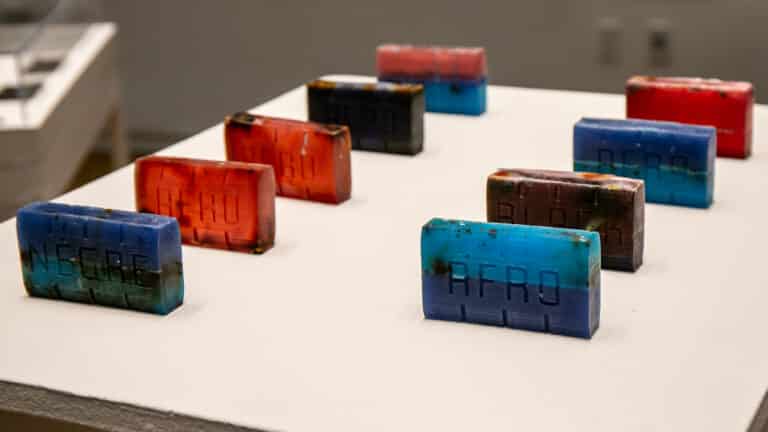
Nine rectangular handmade bars of soap arranged in two rows on a white display surface in a gallery setting. Each bar is composed of layered colors, primarily deep blues, bright turquoises, reds, and dark browns, giving them a striated, geological appearance. Each bar is embossed with a word pressed into its surface; visible words include “NEGRE,” “AFRO,” and “BLACK.” The bars vary slightly in color combination and show traces of organic material embedded within the glycerin. Their handmade quality is evident in the slight irregularities of their surfaces and the uneven distribution of color and herbs throughout each bar.

Material Memory: Francheska Alcántara’s Pedagogy of the Archive

Denisse Brito
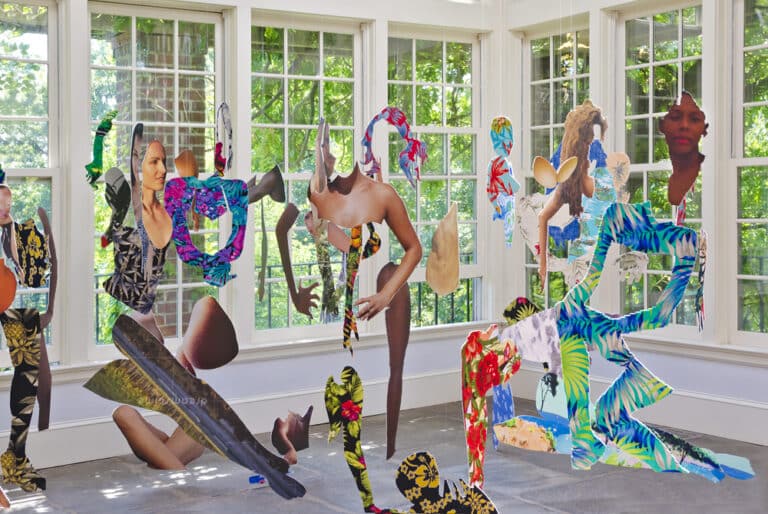
Fragmented cut-outs of women’s body parts are suspended in air, some of which are photographs, and others of which feature silhouetted forms covered in tropical floral prints.

The Construction of Paradise: Joiri Minaya’s Subversion of Colonial Encounters within Caribbean Tourism

Bettina Pérez Martínez
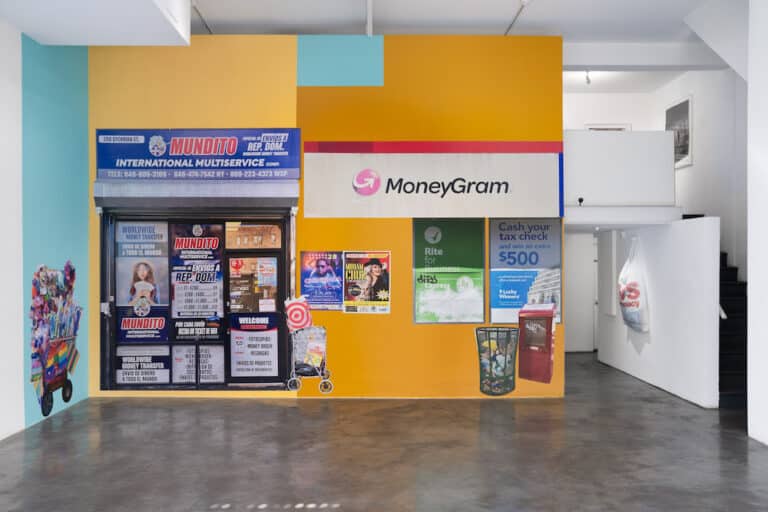
A street vendor’s cart and a hand-held cart stand in front of a colorful wall displaying ads for wire transfer services and concert posters.

The Inheritance of Diligencias

Leslie Ureña

Decolonial Gestures and Entangled Forms: Elia Alba’s Migratory Aesthetics

Benjamin Ogrodnik
USLAF Logo

US Latinx Art Forum, Inc. is a 501(c)3 nonprofit organization. Donations are tax-deductible. Federal Tax ID: 82-0698346

Copyright © 2026 - Designed by Cornershop Creative   Cornershop Creative logo