
Cambiando Vistas/ Shifting Views: Carolina Caycedo and Decolonial Ways of Seeing
What do Latinx decolonial environmental representations do?
How do they convey their imaginaries?
Perhaps most important, how do Latinx authors and artists imagine more just and equitable material outcomes for the characters and situations they depict?
-David J. Vásquez, Decolonial Environmentalisms1
For more than a decade, Los Angeles-based Colombian artist Carolina Caycedo has engaged complex social and environmental issues that link U.S. Latinx and Latin American communities.2 Her multidisciplinary practice, spanning video, installation, sculpture, drawing, and performance, weaves together diverse aesthetic strategies to challenge the colonial, capitalist, and extractive systems that have shaped our fraught relationships with the environment. This essay focuses on two examples of Caycedo’s work, Water Portraits (2015–ongoing) and Fuel to Fire (2023), emphasizing their role as affective art objects that invite new ways of seeing the waters, lands, and ecologies that bind us. For the purposes of this essay, my understanding of “affective art objects” builds on the work of scholars Sara Ahmed and John Dewey, who suggest that emotions, both socially circulating and experientially felt, shape how we perceive and respond to the world.3 Caycedo’s artworks generate such affective encounters, prompting us to rethink ecological and social relations.
Living Bodies of Water
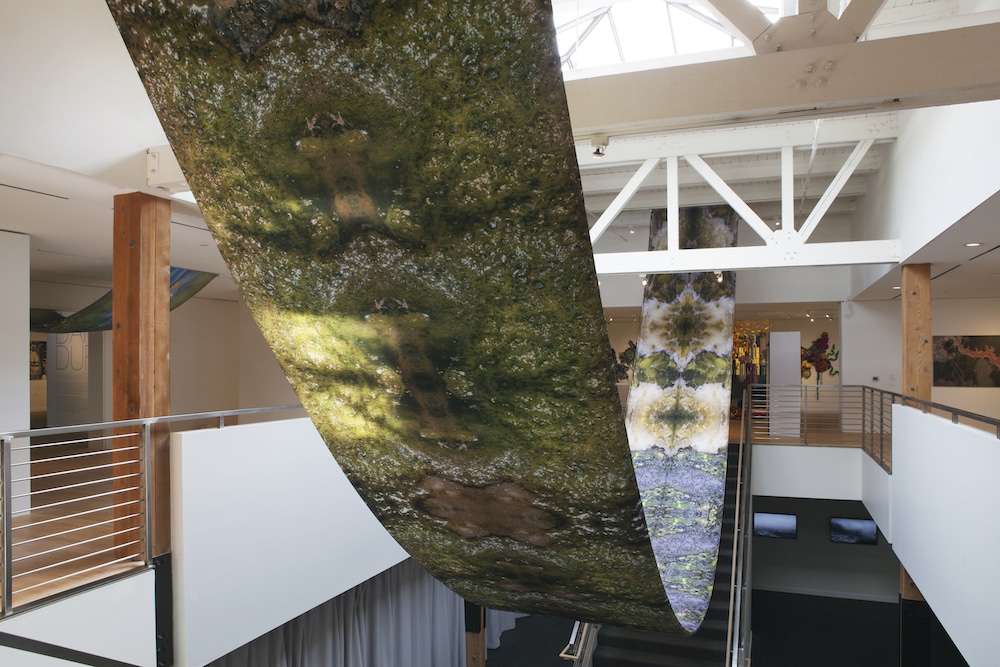
As I step into the atrium of the Orange County Museum of Art, I feel as though I’ve entered a suspended moment in nature. A large cotton canvas, printed with mirrored images of water, drapes gracefully across the space, evoking the slow, sinuous flow of a river or the shelter of a forest canopy. Its massive scale draws my gaze upward, following its undulating surface that ripples with vibrant blues, mossy greens, and earthy browns. As light filters from above and shimmers across the fabric, the ceiling seems to vanish, and I find myself walking beneath a living body of water.
I stand before Wanaawna (2019), a Water Portrait by artist Carolina Caycedo.4 Wanaawna is an Indigenous name for the Santa Ana River, given by the Gabrielino/Tongva peoples of Southern California.5 The river is part of the region’s largest riparian ecosystem and has been important to many tribes who have lived alongside it since time immemorial.6 Through Wanaawna and the broader Water Portraits series, Caycedo challenges the art historical notion of portraiture, traditionally reserved for people, by portraying rivers as their own living beings. Caycedo not only expands the boundaries of the portraiture genre in her work but also proposes a reassessment of our collective (Western) perspective of them.
For the artist, these sculptures carry much more than the image of water; they hold the memory and presence of rivers. They call on us to recognize these waters not as landscapes, as the colonial gaze would assert, but as living beings with their own stories.7 Caycedo invites us to consider rivers and other bodies of water as entities that must be acknowledged—by name, and with spiritual and political agency. In doing so, she challenges the so-called “extractive view” of nature and critiques the European landscape tradition that historically framed the natural world as a domain to be owned, subdued, or exploited.8
While Caycedo’s critique is powerful and readily apparent, I am interested in reflecting on the affective qualities of her sculptures that animate this decolonial perspective. How do the Water Portraits make us feel? And how does materializing an immersive experience of rivers within the gallery inspire us to reconsider our understanding of them? For me, Wanaawna is significant because I was born in Orange County, California; the Santa Ana River has long been my neighbor. Spending time with this artwork reminds me of all the times I have seen the now-channeled river tracing the freeways and cutting sharply across the suburban landscapes of Southern California. And yet, throughout my life, I rarely reflected on the river’s cultural, ecological, and spiritual significance, its history, or its contemporary condition. Settler colonialism and modern development altered the present-day river through concrete channeling, destroying habitats, reducing biodiversity, and disconnecting it from its floodplains. Caycedo’s Water Portraits transform the way I see nature, presenting a vision of the river I had never witnessed before—one that evokes its ancestral condition.9 Experiencing Wanaawna in the gallery drew me into a relational awareness of the river, its past and present waters, and our shared place within a larger, interconnected ecology. The affective component of Caycedo’s work demonstrates, as environmental humanities scholars Joni Adamson and Salma Monani have observed, that Indigenous cosmovisions are not only important knowledge frameworks but also dynamic practices of everyday life, fostering embodied ways of knowing and relating to the natural world.10 Being with rivers asks us to confront the colonial conditioning that teaches us to see them as separate from ourselves.11 Through Wanaawna, Caycedo offered me this lesson, one I now hope to carry forward and share with others.
Seeing Reciprocity
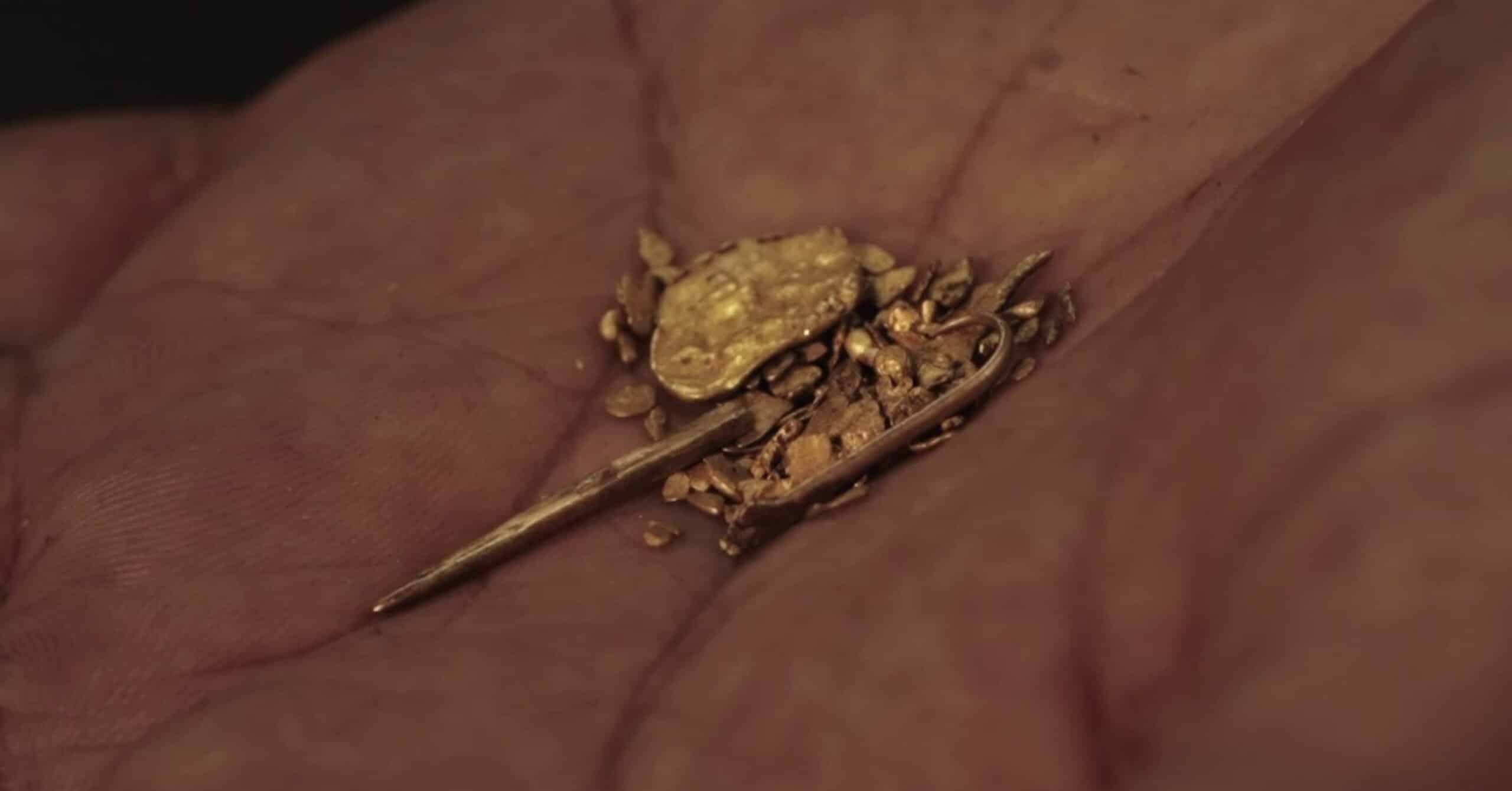

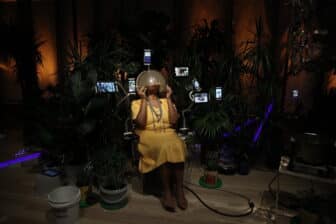
In a separate video work, Fuel to Fire (2023), Caycedo visualizes the intense and complex relationship between gold and humanity. In Colombia, gold has long held deep significance: it has been used in rituals, shaped economies, and sustained the livelihoods of thousands of artisanal workers. Yet today, gold extraction continues to fuel environmental destruction and colonial patterns of exploitation.12 A striking example is the Soto Norte Project, a transnational joint venture led by Aris Mining Corporation and supported by the United Arab Emirates investment company Mubadala. The project threatens to extract gold from the Páramo de Santurbán, an unprotected high-altitude wetland in Santander, Colombia. Mining in the páramo (moorland) threatens the region’s freshwater supply, a resource vital to nearly two million people.13
Fuel to Fire shares an alluring narrative of gold moving between hands, bodies, and territories. Though the film contains no dialogue, its visual imagery, Caycedo’s movements alongside collaborators Juana Valentina Solis and Nilson Galindo, and the music of Orito Cantora and Jenn Del Tambó coalesce into a broader meditation on humanity’s entanglement with gold and other minerals across time. First presented in 2023 at Sharjah Biennial 15—in the very home of Mubadala—Fuel to Fire provides a potent critique of global mining economies.
I first watched the film during a virtual studio visit with the artist that same year. We would later include the film in the exhibition We Place Life at the Center / Situamos la vida en el centro at the Vincent Price Art Museum at East Los Angeles College in 2024–25. As exhibition curator and staff member at the museum, I held a unique proximity to the work: for months, I experienced it both inside and outside of the galleries, often hearing its echoes spill into my office. The deep vibrato and resonance of Orito’s singing, “…Saaaa aaaa aann turbán … Saaaa aaaa aann turbán…,” regularly caught my attention, becoming, for me, a subtle marker of time.
Throughout the film, Caycedo offers a payback of gold, or a pagamento, which is a traditional act of gratitude and reciprocity toward the earth. As we witness the act of hands and bodies engaging with gold and returning it to the river, Caycedo highlights how everyday gestures can affirm a commitment to the earth’s ecological balance. This act is deeply personal for the artist as the gold they return in the film had been previously purchased by Caycedo from artisanal miners for use in earlier artworks. Instead of remaining trapped in cycles of commodification and accumulation, the gold is intentionally given back to nature, honoring the river and the ecosystem of Santurbán in the process. This gesture of return sets the stage for the broader ritual and political dimensions of Caycedo’s practice.
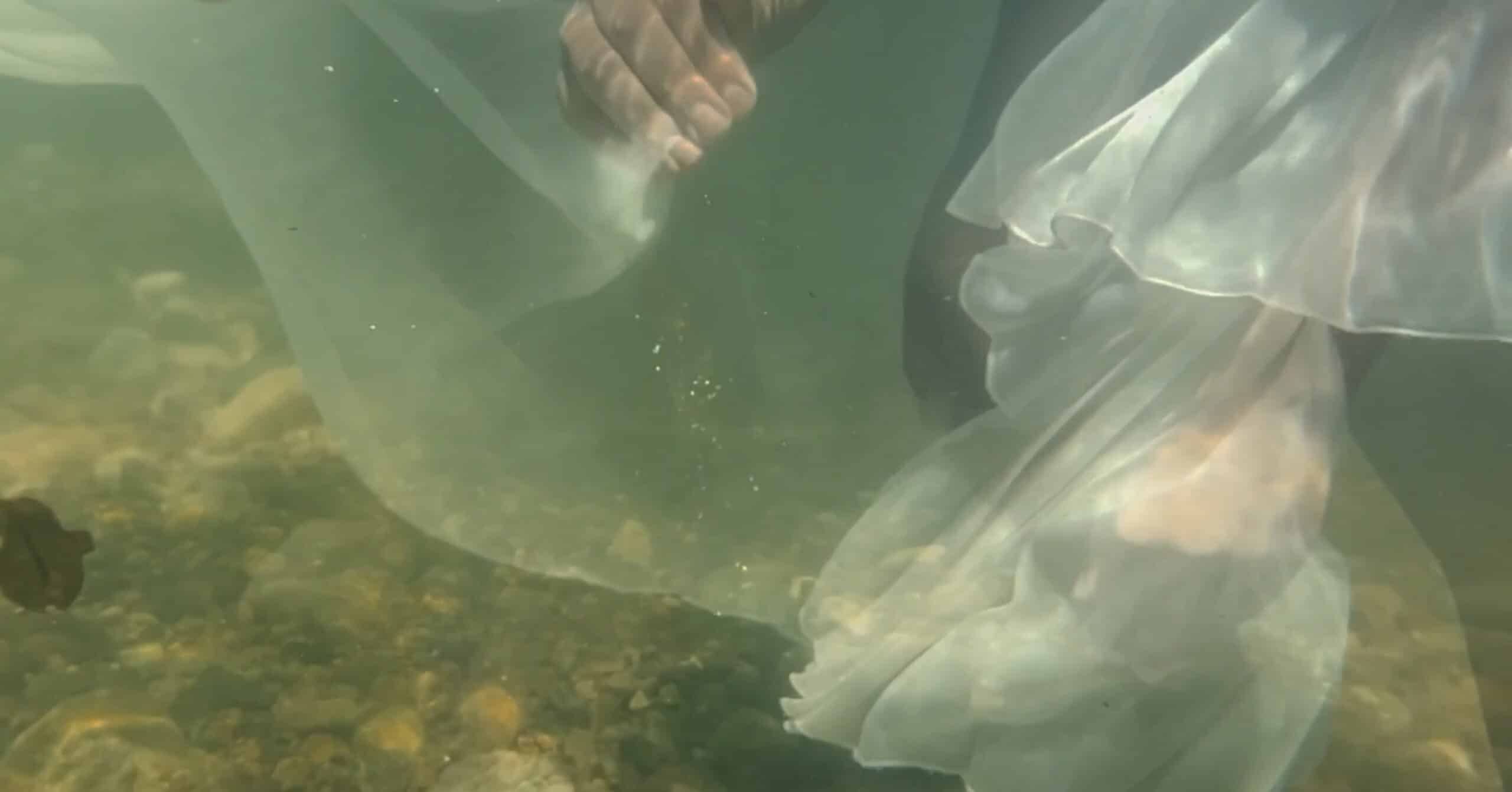
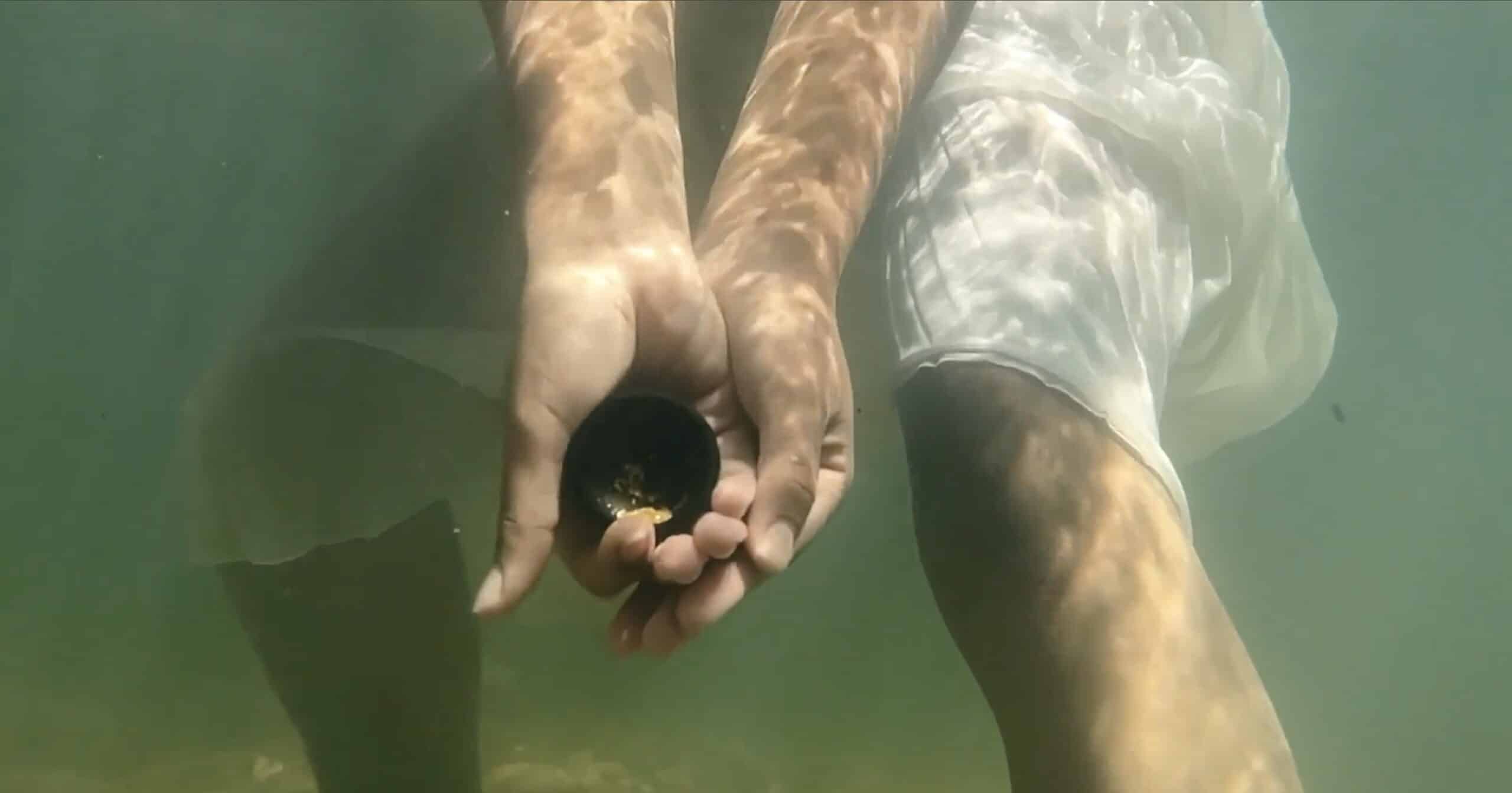
Ritual and reciprocity run strongly through Caycedo’s recent work, and Fuel to Fire especially underscores the significance of these Indigenous and ancestral ways of doing. In a lecture at Brown University, Caycedo explained that works like Fuel to Fire hold not only visual or aesthetic significance but also ritual and political power. She described her practice as casting “visual spells,” and in this work, she frames the video as her contribution to the struggle to protect the páramo of Santurbán: “The fact that I can put this visual spell in the heart of the Emirates right now, for me, this is my little contribution to this struggle that is happening.”14 Although she cannot always be on the frontlines, Caycedo enacts her own ritual acts of resistance, reminding us that imbalance, or taking without giving back, produces ecological, social, and spiritual sickness. Her work makes clear how colonial racial capitalism, which organizes wealth through racial hierarchies and through the extraction and expropriation of both land and labor, has rendered our planet profoundly ill.15
Reflecting on my experiences of watching Fuel to Fire, I return to the feeling of being drawn into this ritual act. The mesmerizing video’s flames, chants, and gestures carry a sense of protection that extends beyond the installation, reminding me that art itself can operate as a form of offering. It left me wondering how art can teach us reciprocity through seeing, and how this seeing might empower us to give back to the ecosystems that sustain us. Just as Wanaawna reshaped how I see rivers, Fuel to Fire invited me to recognize a more reciprocal relationship with the earth, grounded in care, balance, and responsibility. Beyond the film, Caycedo extends this commitment through her practice of “ecological balancing,” tracking her carbon consumption and redirecting part of her financial and cultural gains toward frontline communities fighting for environmental justice.16 In this way, Fuel to Fire becomes both a ritual of resistance and a call to enact more reciprocal ways of inhabiting the earth.
Shifting Views
Through deeply affective approaches, Water Portraits and Fuel to Fire invite us to experience the world differently, revealing how gestures rooted in ancestral and embodied perspectives can confront the legacies of colonial violence, the separation of humans from nonhuman life, and the global culture of greed that threatens our planet.17 By attuning us to “visual and material witnessing” from below and beyond dominant narratives, these works demonstrate art’s power to transform how we perceive and relate to the natural world.18 May these decolonial ways of seeing and being take root in how we imagine, remember, and live within the places we call home.
Endnotes
- David J. Vásquez, Decolonial Environmentalisms: Climate Justice and Speculative Futures in Latinx Cultural Production (University of Texas Press, 2025), 5. ↩︎
- See artist quote featured in “Carolina Caycedo – Latinx Artist Fellowship Page,” U.S. Latinx Art Forum, May 26, 2023, accessed June 28, 2025, https://uslaf.org/member/carolina-caycedo. ↩︎
- For further reading, see Sara Ahmed, The Cultural Politics of Emotion (Routledge, 2004), 20-25; and John Dewey, “Having an Experience,” in Art as Experience (Perigee Books, 1980), 41-42. See also the work of curator Carla Acevedo-Yates, who has written about Caycedo’s research and fieldwork as a process of “Affective Exchanges” in “Embodied Spiritual Fieldwork: Dismantling Western Perspectives Through Affective Exchanges” in Carolina Caycedo: From the Bottom of the River (MCA Chicago and DelMonico Books), 20-49. ↩︎
- This artwork was prominently featured in the exhibition Carolina Caycedo: Wanaawna, Rio Hondo and Other Spirits (2019-2020). The exhibition was organized by the Orange County Museum of Art and curated by Cassandra Coblentz, https://ocma.art/exhibitions/carolina-caycedo-wanaawna-rio-hondo-and-other-spirits/. ↩︎
- Charles Sepulveda, “Our Sacred Waters: Theorizing Kuuyam as a Decolonial Possibility,” Decolonization: Indigeneity, Education & Society 7, no. 1 (2018): 40. ↩︎
- Sepulveda, “Our Sacred Waters,” 41. ↩︎
- For more on the colonial gaze in relation to landscape, see Tiffany Kaewen Dang, “Decolonizing Landscape,” Landscape Research 46, no. 7: 1004-16, https://doi.org/10.1080/01426 397.2021.1935820; and Franklin Ginn, “Decolonizing Environmental Humanities,” Environmental Humanities 15, no. 3: 2-7, https://doi.org/10.1215/22011919-10745946. ↩︎
- I am borrowing the term “extractive view” from scholar Macarena Gómez-Barris, who has written about Caycedo’s work in her book Extractive Zone: Social Ecologies and Decolonial Perspectives (Duke University Press, 2017), 109. ↩︎
- As Charles Sepulveda notes, the spirits of land and water hold memories of their ancestral condition and of our reciprocal relations with them, “waiting to be re-learned, evaluated, analyzed, and applied in ways I can only imagine.” See Sepulveda, “Our Sacred Waters,” 44. ↩︎
- Joni Adamson and Salma Monani, Ecocriticism and Indigenous Studies: Conversations from Earth to Cosmos (Routledge), 8. ↩︎
- As part of her OCMA project, Caycedo invited seven collaborators to activate the water portraits in the Santa Ana River channel, a performance and film in which artwork, human body, and river converged, transforming the portraits from static images into tools for connection with the waters. See Carolina Caycedo, Thanks for Hosting Us We are Healing Our Broken Bodies, excerpt, April 29, 2020, with Marina Magalhaes, José Richard Aviles, Tatiana Zamir, Belle Alvarez, Bianca Medina, Isis Avalos, Patty Huerta, and Celeste Tavares, Vimeo video, 2:48, https://vimeo.com/420834160. ↩︎
- Caycedo speaks about gold’s history and current extraction in Colombia in a recent talk. See “Fuel to Fire,” virtual lecture, March 8, 2023, by the Brown Arts Institute and the Cogut Institute’s Initiative for Environmental Humanities at Brown University, YouTube, 59:59, https://youtu.be/M9YFo02NUOk?si=Mx_gnjH2kbixlysh. ↩︎
- Learn more by visiting each organization’s website: https://aris-mining.com/operation/soto-norte/ as well as the recent sale of stake by Mubadala amidst rising environmental and activist pressure: https://enterprise.news/uae/en/news/story/6a7ebb21-9a38-4f13-962b-3a51cc376678/mubadala-reduces-stake-in-colombia-gold-project. ↩︎
- Caycedo, “Fuel to Fire.” ↩︎
- This joint racial and colonial lens on capitalism transforms how we understand and see the world, exposing extraction and dispossession as fundamental to the global economic order. For more on this point, see Susan Koshy, Lisa Marie Cacho, Jodi A. Byrd, and Brian Jordan Jefferson, Colonial Racial Capitalism (Duke University Press, 2022), 1-7. ↩︎
- Ecological balancing refers to fostering healthier, reciprocal relationships with the environment and its communities, which is distinct from market-driven approaches like carbon offsetting. In our exhibition, publication, and educational project We Place Life at the Center / Situamos la vida en el centro, Caycedo and I followed the guidance of project advisor Angela Mooney D’Arcy (Acjachemen/Juaneño), who shared teachings rooted in ecological reciprocity with Southern California lands, peoples, and local environmental justice efforts. See Carolina Caycedo and Joseph Daniel Valencia, We Place Life at the Center / Situamos la vida en el centro (Vincent Price Art Museum and X Artists’ Books, 2025), 62. ↩︎
- These phenomena, and environmental crises in general, are products of coloniality, modernity, racism, and capitalism. For more on this point in relation Latinx and Latin American communities, see David J. Vásquez, Decolonial Environmentalisms: Climate Justice and Speculative Futures in Latinx Cultural Production (University of Texas Press, 2025), 4-6 and 9-13. ↩︎
- Macarena Gómez-Barris, The Extractive Zone: Social Ecologies and Decolonial Perspectives (Duke University Press, 2017), 109, frames “visual and material witnessing” as a means of perceiving social and ecological relations from decolonial perspectives. Caycedo not only enacts this witnessing in her work but, in the process, “activates the visible” (per Mirzoeff), transforming passive reflection into active engagement within her installations. She not only changes how we see, but directs our attention to what has long been erased or obscured by colonial racial capitalism. See also Nicholas Mirzoeff, An Introduction to Visual Culture, 3rd ed. (Routledge, 2023), 1. ↩︎
Cite as: Joseph Daniel Valencia, “Cambiando Vistas/ Shifting Views: Carolina Caycedo and Decolonial Ways of Seeing,” in X as Intersection: Writing on Latinx Art, January 13, 2026, accessed [DATE], https://uslaf.org/essay/cambiando-vistas-shifting-views-carolina-caycedo-and-decolonial-ways-of-seeing/.
Joseph Daniel Valencia is a scholar of Latinx art with a research background in the art and history of California and the hemispheric Americas. He is Curator of Exhibitions at the Vincent Price Art Museum at East Los Angeles College, where he recently organized We Place Life at the Center / Situamos la vida en el centro (2024-2025).